Quick Summary: A UK car service usually includes oil and filter changes, fluid checks, brake and tyre inspections, lights and wipers, and safety checks. The scope varies by garage and service level, with full or premium packages adding filters, diagnostics, suspension, and deeper inspections. Regular servicing helps prevent safety issues, reduces repair costs, and keeps your vehicle reliable, but always compare checklists and ask what’s included before booking.
A Car Service UK package is not fixed. One garage may only cover oil, filters, and basic safety checks. Another may add diagnostics, brake checks, and fluid changes. That is why many drivers ask what a Car Service Includes before they book.
This gap makes quotes hard to compare. It also makes Vehicle Service Costs harder to judge. You may pay for a basic Garage Vehicle Service when your mileage, warranty, or MOT Testing UK timing calls for more. For drivers managing UK Car Maintenance, that can lead to missed work or wasted money.
This guide works as a vehicle maintenance checklist, a car service checklist, and a plain-english look at what a complete car service usually covers. It explains how a car service can vary, What a car service includes at each level, and how to match the right car service plan to your car, van, or fleet vehicle maintenance needs.
Table of Contents
Car Service Checklist
| Service Item | Best for | Typically included in | Why it matters |
|---|---|---|---|
| Engine oil and oil filter change | Every petrol, diesel, hybrid, and many light commercial vehicles | Interim service, full service, and most manufacturer-aligned services | Protects the engine and supports long-term reliability |
| Fluid level top-ups and condition checks | Drivers who want a practical maintenance check between major repairs | Most interim and full services | Prevents avoidable overheating, poor braking, and low-visibility problems |
| Brake inspection | Safety-conscious drivers and vehicles with high annual mileage | Interim and full services; deeper inspection in higher tiers | Directly affects stopping distance and road safety |
| Tyre condition and pressure check | All road users, especially high-mileage and commercial vehicles | Most services and safety inspections | Affects braking, handling, wear, and running costs |
| Lights, wipers, and washer system check | All drivers, especially in winter and heavy-rain conditions | Interim and full services, plus pre-MOT checks | Visibility affects both safety and legal roadworthiness |
| Air filter and cabin/pollen filter replacement | Drivers wanting a more complete annual service | Full service and manufacturer-style service packages | Supports engine efficiency and cabin air quality |
| Suspension inspection | Vehicles exposed to rough roads, high mileage, or payload use | Most services as an inspection item | Affects comfort, control, and tyre wear |
| Fuel filter replacement | Higher-mileage vehicles and some diesel models | Full services or mileage-specific schedules | Protects fuel-system performance and longevity |
| Battery health check | Winter use, infrequent drivers, and fleet vehicles | Higher-tier services and diagnostics-led inspections | Prevents inconvenient starting failures |
| Diagnostic scan | Modern cars, fleet vehicles, and cars with warning lights | Premium service tiers or when requested | Finds faults that visual checks can miss |
| Brake strip-down, clean, and refit | High-mileage drivers and vehicles with brake wear concerns | Higher service tiers such as full or premium packages | Supports brake consistency and long-term performance |
| Oil system flush and fuel additive treatment | Drivers choosing a premium or more thorough service package | Top-tier services such as platinum-style packages | Can support deeper cleaning and engine care where appropriate |
What to know about car servicing in the UK
A car service in the UK is a planned maintenance check that helps keep your vehicle safe, reliable, and cheaper to run. It usually covers core fluids, key mechanical checks, and a written note of anything worn or likely to need work soon. The exact package changes by garage and by service level.
This matters because small faults often turn into bigger bills if you leave them too long. A proper service can help spot brake wear, tyre issues, fluid loss, and engine problems before they affect safety or MOT results.
A service is not the same as an MOT. The MOT checks legal roadworthiness. A service helps prevent problems before they reach that stage.
1. Engine oil and oil filter change
This is the foundation of almost every car service. Fresh oil lubricates moving parts, cuts heat and friction, and helps stop early engine wear, while the filter traps dirt instead of letting it recirculate through the engine, as explained by the RAC oil change guide.
Highlights
- Fresh oil helps protect internal engine parts from wear.
- A new filter removes sludge and debris from the lubrication circuit.
- Usually included in interim, full, and major services.
- High-mileage and commercial vehicles need this most.
Specs
- Best for: Every petrol, diesel, hybrid, and many light commercial vehicles
- Typically included in: Interim service, full service, and most manufacturer-aligned services
- Maintenance priority: Highest
- Why it matters: Protects engine life and reliability
Pros
- Standard across most UK service levels.
- Easy to compare between garages.
Cons
- It will not reveal every hidden fault.
- Wrong oil spec can still cause problems. In fact, RAC says delays raise wear and engine damage risk.
2. Fluid level top-ups and condition checks
This is a basic but vital part of a roadworthy service. A good garage checks and tops up key fluids like coolant, screen wash, and brake fluid, while also looking for leaks, contamination, or signs a fluid needs replacing, not just filling.
Highlights
- Helps keep engine temperature stable and your windscreen clear.
- Supports braking safety, as DVSA MOT guidance includes brake fluid checks .
- Can spot leaks or unusual fluid loss early.
- Works well before an MOT or long trip, and the Highway Code says fluid levels should be checked at least weekly .
Specs
- Best for: Drivers who want a practical maintenance check between major repairs
- Typically included in: Most interim and full services
- Maintenance priority: High
Pros
- Quick way to catch low levels early
- Low cost versus overheating or poor visibility
Cons
- Top-ups do not fix the root fault
- Change times vary by fluid and vehicle
3. Brake inspection
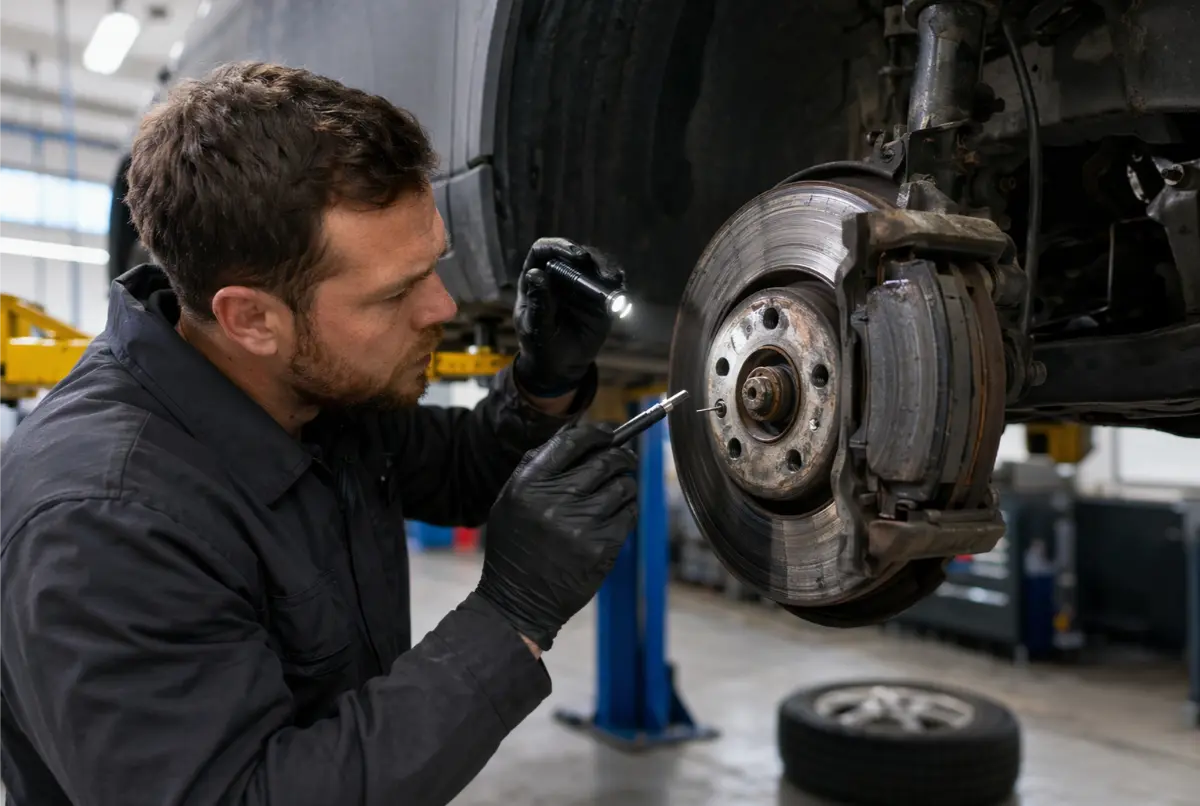
Brake inspection is one of the most important safety checks in any service. A proper Car Service UK brake check looks at pad wear, disc condition, callipers, hoses, handbrake function, and how the brakes perform overall, which also lines up closely with DVSA MOT brake checks .
Highlights
- Finds wear before braking power drops.
- Can spot sticking callipers or uneven pad wear.
- Often helps you act on common MOT brake issues early.
- Vital for cars, vans, fleets, and HGV-linked service planning.
Specs
- Best for: Safety-conscious drivers and high-mileage vehicles
- Typically included in: Interim and full services; deeper inspection in higher tiers
- Maintenance priority: Highest
- Why it matters: Directly affects stopping distance and road safety
Pros
- Direct safety benefit
- Can prevent bigger brake damage if caught early
- Useful for predicting future MOT issues
Cons
- Wear found may lead to extra repair costs
- Parts may need replacement even if the service is complete
4. Tyre Condition and Pressure Check
A proper service should check tread depth, sidewall damage, uneven wear, and tyre pressures. This simple check affects grip, braking, handling, and fuel use. The Highway Code also states that tyres should be correctly inflated.
Highlights
- Helps spot unsafe wear and poor grip early.
- Correct tyre pressures can help reduce running costs.
- Uneven wear can highlight alignment or suspension faults.
- Useful for private cars and fleet vehicles.
Specs
- Best for: All road users, especially high-mileage and commercial vehicles.
- Typically included in: Most services and safety inspections.
- Maintenance priority: High.
- Why it matters: Affects braking, handling, wear, and running costs.
- UK car maintenance note: Car tyres must have at least 1.6mm legal tread depth under UK law.
Pros
- Improves safety and stability.
- Can extend tyre life.
Cons
- A check does not prevent tyre replacement if the tyres are already worn or damaged.
- Uneven wear may point to deeper alignment, suspension, or steering issues.
It ranks here because tyres are a legal, visible, MOT-adjacent part of any car service checklist.
5. Lights, Wipers, and Washer System Check
This check covers headlights, indicators, brake lights, fog lights, wipers, washers, and basic electrical operation. It matters because drivers need to see clearly and be seen. The Highway Code also states that these items should be in good working order.
Highlights
- Confirms safe visibility in rain, fog, and darkness.
- Helps catch simple MOT issues, as lamps and electrical equipment are checked during the MOT.
- Often identifies split wiper blades, weak washer spray, or failed bulbs before winter.
Specs
- Best for: All drivers, especially during winter and heavy rain.
- Typically included in: Interim services, full services, and pre-MOT checks.
- Maintenance priority: High.
Pros
- Low cost with a high safety impact.
- Can prevent avoidable MOT failures.
Cons
- Bulbs can still fail after the check.
- Small extra costs may apply for replacement blades or bulbs.
It ranks here because it is one of the quickest checks with one of the biggest day-to-day safety benefits.
6. Air Filter and Cabin/Pollen Filter Replacement
These two filters affect engine breathing and cabin comfort. In a complete car service, they are often changed as part of a full service, while cheaper bookings may only include an inspection. A clean cabin filter can also help with demisting, and UK rules require vehicles to have an effective windscreen demisting system.
Highlights
- Supports smoother engine airflow and efficiency.
- Improves cabin air quality and comfort.
- Can help heating and demisting performance.
- Often included in full-service packages.
Specs
- Best for: Drivers wanting a more complete annual service.
- Typically included in: Full services and manufacturer-style service packages.
- Maintenance priority: Medium-high.
- Why it matters: Supports engine efficiency and cabin air quality.
Pros
- Improves comfort and filtration.
- Can contribute to better engine performance.
- A strong value item in annual servicing.
Cons
- Not always included in cheaper interim services.
- Some vehicles have more than one cabin filter or a tighter filter layout.
It ranks here because filter replacement is one of the clearest upgrades between basic and full-service packages.
7. Suspension Inspection
A suspension inspection is a key wear check for handling, comfort, and tyre life. A service usually looks for worn shocks, springs, bushes, mounts, leaks, and visible damage that could affect control over time. UK MOT guidance also treats many suspension defects as safety issues.
Highlights
- Helps spot wear before it affects safety.
- Supports even tyre wear and stable handling.
- Useful on UK roads, where potholes can accelerate damage.
- Often checked alongside steering and wheel condition.
Specs
- Best for: Rough roads, high mileage, and payload use.
- Typically included in: Most services as an inspection item.
- Maintenance priority: Medium-high.
- Why it matters: Affects comfort, control, and tyre wear.
Pros
- Can catch wear before costs increase.
- Helps explain pulling, vibration, or uneven tyre wear.
Cons
- A static check may miss some faults without a road test.
- Repairs can become costly if several parts are worn.
It ranks here because suspension matters for safety and comfort, but basic services usually inspect it rather than replace parts.
8. Fuel Filter Replacement
Fuel filter replacement is not part of every complete car service, but it often appears in fuller or mileage-based service schedules. It helps protect injectors and fuel delivery parts from dirt and water, which can be especially important on diesel vehicles.
Highlights
- Protects fuel delivery components from contamination.
- More likely to be included in a full or manufacturer-style service.
- Important on some diesel vehicles.
- Can support smoother running if the old filter is restricted.
Specs
- Best for: Higher-mileage vehicles and some diesel models.
- Typically included in: Full services or mileage-specific schedules.
- Maintenance priority: Medium.
- Why it matters: Protects fuel-system performance and longevity.
Pros
- Helps maintain fuel-system cleanliness.
- Can improve reliability when changed at the right service interval.
- Useful for vehicles covering heavy motorway or business miles.
Cons
- Not required on every service.
- Replacement timing depends on manufacturer guidance.
It ranks here because it is a genuine service item, but it varies by model and service level.
9. Battery Health Check
A battery health check is a simple check that can help prevent no-start problems. It usually covers voltage, charging performance, and visible terminal corrosion. Short trips and cold weather can make battery weakness more likely.
Highlights
- Helps prevent unexpected starting issues.
- Useful before winter and after repeated short journeys.
- Can identify weak charging or electrical concerns.
- Relevant for cars, vans, and specialist vehicles.
Specs
- Best for: Winter use, infrequent drivers, and fleet vehicles.
- Typically included in: Higher-tier services and diagnostics-led inspections.
- Maintenance priority: Medium.
- Why it matters: Helps prevent inconvenient starting failures.
- Target keywords: Fleet Vehicle Maintenance, Car Service Checklist, UK Car Maintenance.
Pros
- Quick and informative.
- Helps avoid breakdown callouts.
- Very relevant for stop-start use and short journeys.
Cons
- A passing test today does not guarantee long-term battery life.
- Some faults are intermittent and harder to reproduce.
It ranks here because it is highly useful, but not always included in every basic service package.
10. Diagnostic Scan
A diagnostic scan is a modern check for stored fault codes and live system issues. It helps identify engine, emissions, battery, ABS, and sensor faults that a visual check can miss. Modern cars use onboard diagnostics, and warning lights often point to stored trouble codes rather than one obvious failed part.
Highlights
- Useful when dashboard warning lights are on.
- Can identify hidden issues before they become failures.
- Especially important on modern cars with complex electronics.
- Often included in premium service tiers.
Specs
- Best for: Modern cars, fleet vehicles, and vehicles with warning lights.
- Typically included in: Premium service tiers or when requested.
- Maintenance priority: Medium.
Pros
- Helps find faults linked to MOT emissions and warning light checks.
- Good for early fault planning.
Cons
- Usually not included in the cheapest services.
- Often leads to further testing rather than an instant fix.
It ranks here because it is powerful, but less standard than core mechanical service items.
11. Brake Strip-Down, Clean, and Refit
This is a deeper brake service found in higher-tier packages. A garage removes key brake parts where suitable, cleans contact points, checks for sticking, then refits and adjusts them to help braking remain even and consistent.
Highlights
- More thorough than a visual brake inspection.
- Helpful for older or high-mileage vehicles with brake wear concerns.
- Common in full or premium service packages.
Specs
- Best for: High-mileage drivers and vehicles with brake wear concerns.
- Typically included in: Higher service tiers such as full or premium packages.
- Maintenance priority: Medium-high.
Pros
- Can help prevent sticking components.
- Strong value on hard-worked vehicles.
Cons
- Adds time and cost.
- Not needed every year on every vehicle.
It ranks here because it is not standard in every complete car service, but it is a useful upgrade.
12. Oil System Flush and Fuel Additive Treatment
This is a premium add-on, not a standard part of most UK services. Some top-tier packages include an oil flush before fresh oil and a fuel treatment to help clean deposits, but these are not usually core service items.
Highlights
- More common in premium service packages.
- Often paired with broader engine care and extra checks.
Specs
- Best for: Drivers choosing a premium or more thorough service package.
- Typically included in: Top-tier services such as platinum-style packages.
- Maintenance priority: Low-medium.
Pros
- May support deeper cleaning where needed.
- Can add value for older cars or vehicles with patchy service history.
Cons
- Not standard on basic services.
- Benefits depend on the vehicle and whether the treatment is actually needed.
It ranks here because it is a genuine service add-on, but not a universal core service item.
How to Choose the Right Car Service
Pick the service by use, mileage, and risk, not just price. A cheap booking can cost more later if key checks are missing.
- Match it to mileage and age: Low-mileage cars used for short local trips may suit an interim-style service. Older cars, annual services, and high-mileage vehicles usually need a full service.
- Read the item list: Two garages may both offer a “full service” but include different oil grades, filters, inspections, or scan checks. Compare the checklist line by line.
- Check your manual first: Your vehicle handbook is the final word for manufacturer servicing, especially if the car is under warranty or uses a digital service record.
- Go deeper for hard use: If you tow, drive long motorway miles, run a fleet, or use the vehicle for work, choose a more thorough service. Brakes, tyres, and suspension usually wear faster under harder use.
- Price the likely extras: Ask whether brake fluid, coolant, air conditioning work, or diagnostics are included or charged separately. This makes quotes easier to compare.
- Choose diagnostic ability if there are symptoms: Warning lights, odd noises, pulling, or uneven tyre wear need a garage that can service the car and explain repairs clearly.
In Bromsgrove, A.M. Engineering is a strong choice if you want servicing, diagnostics, and transparent repair advice in one visit.
Want a clear answer on what your car actually needs? Book with A.M. Engineering for honest servicing, MOTs, diagnostics, repairs, and fleet support. You get transparent checks, practical advice, and work that fits UK driving and business demands. If you are in Bromsgrove or manage vehicles across the UK, contact the team and get your service booked.
Frequently Asked Questions
A typical UK car service includes an oil and filter change, fluid top-ups, brake checks, tyre inspection, battery test, lights check, steering and suspension review, and a general safety inspection.
Full and major services may also include additional filters, spark plugs, and deeper mechanical checks.
Most UK cars need servicing every 12 months or every 10,000 to 12,000 miles, whichever comes first.
Check your handbook because some newer cars use variable service schedules. Short trips, towing, heavy loads, and stop-start driving can mean your car should be serviced sooner.
At A.M. Engineering, checks usually cover engine oil, filters, brakes, tyres, suspension, steering, exhaust, battery health, lights, belts, hoses, wipers, and dashboard warning lights.
The team also looks for wear, leaks, and safety issues that could turn into larger repair bills if left unresolved.
The base service usually covers labour and the checks listed in the service package, but extra parts and repairs often cost more.
Brake pads, tyres, spark plugs, specialist oils, diagnostics, and fault repairs may be charged separately. Always ask for a clear quote before work begins.
A.M. Engineering combines local service with broad workshop capability, including support for personal vehicles, commercial fleets, and heavier vehicles.
Clear communication, experience, and practical fault finding help drivers understand what is urgent, what can wait, and what the work is likely to cost.
Regular servicing helps your car stay safe, reliable, and cheaper to run over time.
It can improve fuel economy, catch wear early, protect resale value, support warranty terms, and reduce the risk of breakdowns, failed MOTs, and costly emergency repairs.
Many independent garages offer phone, email, or online booking options, and A.M. Engineering may provide a simple way to arrange service visits.
If online booking is not available for your vehicle type, contact the garage directly to confirm timing, price, and parts.
Quality and transparency come from clear inspections, honest advice, and approval before extra work starts.
A.M. Engineering helps by explaining what has been found, why it matters, and what it will cost before carrying out additional work.