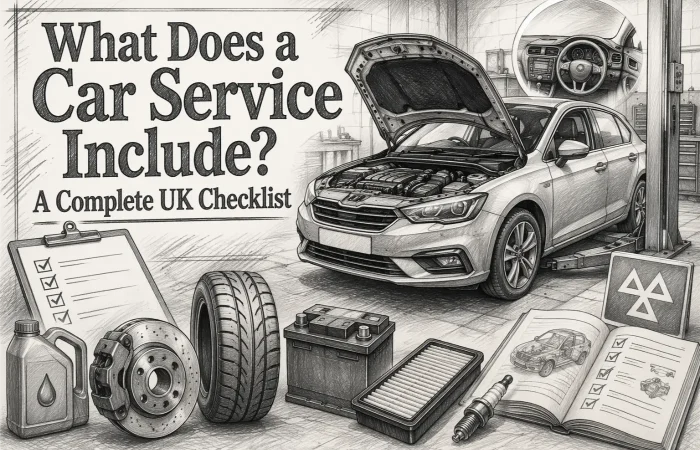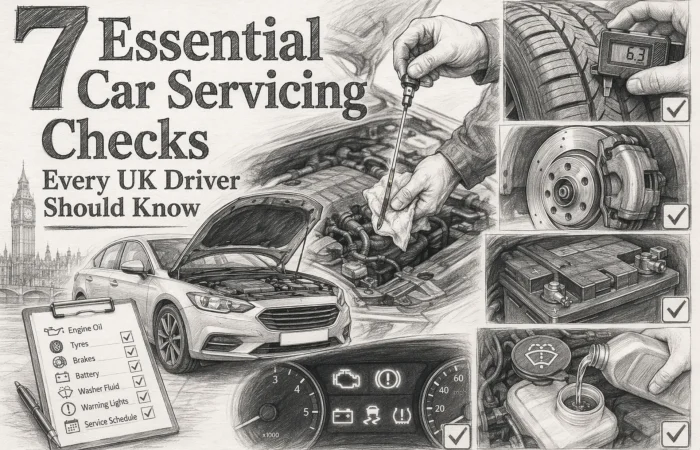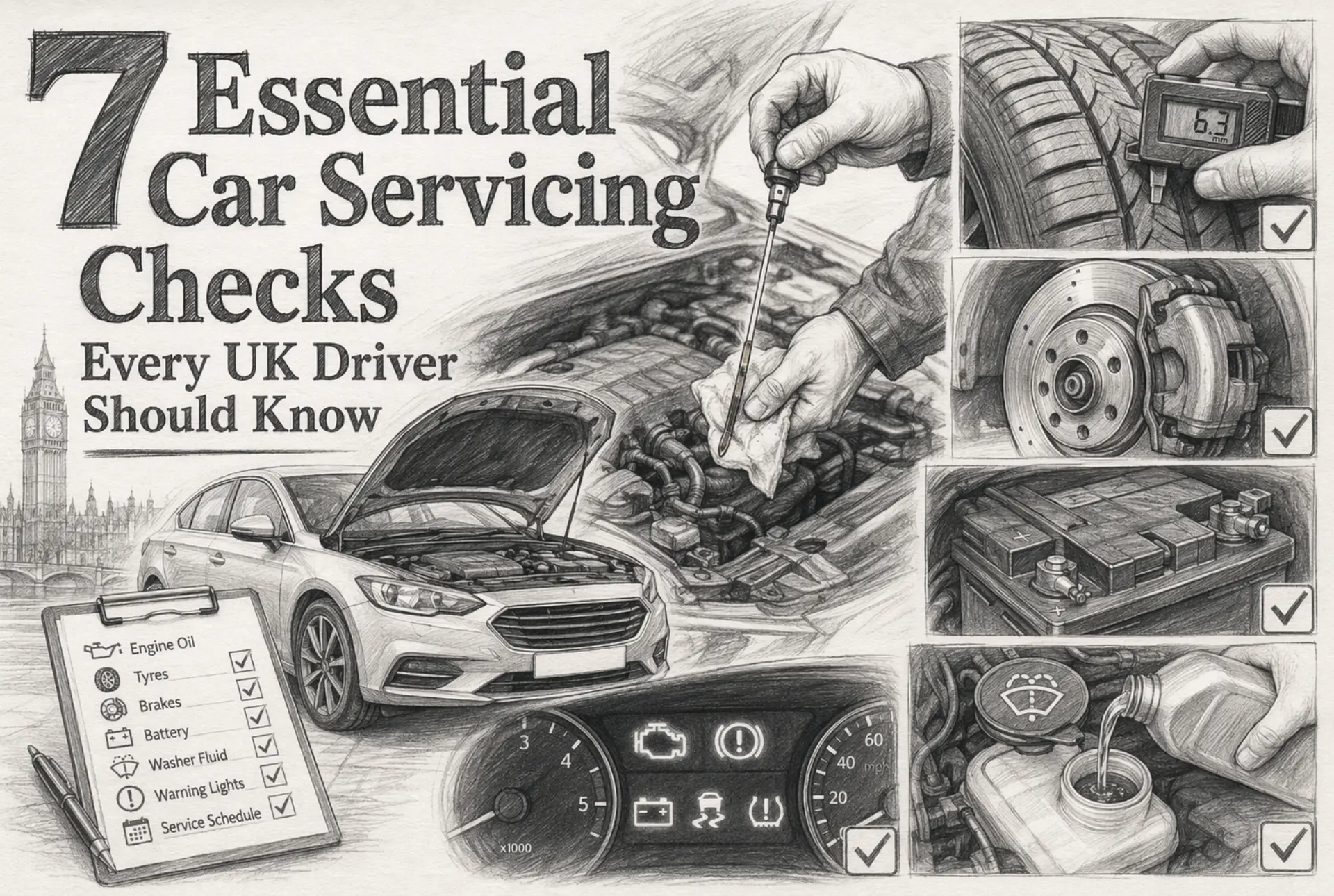
Quick Summary: Regularly checking tyres, lights, brakes, and fluids can prevent breakdowns and keep your car safe on UK roads. A quick walkaround before each trip helps spot issues early, especially in winter or long journeys. Maintaining these simple checks can save money and avoid safety risks. If you notice problems, get professional servicing promptly.
A quick five-minute walkaround and bonnet look can stop common UK roadside problems before school runs, motorway miles, or cold winter commutes. Many drivers only think about Car Servicing Checks after a warning light, failed MOT, or breakdown, but key faults often start with tyres, fluids, lights, and brake feel. This guide ranks Car Servicing Checks, mixes in practical Vehicle Maintenance Tips, and shows when a UK Car Inspection or garage visit is the right next step.
Table of Contents
Quick Comparison
| Check | Best for | Why it matters | How often to check |
|---|---|---|---|
| Tyre condition and pressure | Grip, braking, and legality | Poor tyres can increase stopping distance and raise breakdown risk | Weekly and before long journeys |
| Lights and visibility | Being seen and seeing clearly | Lighting faults can make the car illegal or dangerous in poor visibility | Every journey, plus weekly walkarounds |
| Brake performance and warning signs | Stopping power and fault detection | Brake issues can escalate into dangerous loss of control | Every journey feel-check, with professional inspection at service intervals |
| Fluid levels | Preventing overheating and wear | Low fluids can cause breakdowns or expensive mechanical damage | Weekly and before long trips |
What to know about car servicing checks
1. Tyre condition and pressure
Tyres have the biggest day-to-day effect on grip and stopping distance. Check them weekly and before long trips, because the Highway Code says pressures should be checked cold, and UK law requires at least 1.6mm tread across the central three-quarters.
Highlights
- Use the car maker’s pressure settings.
- Look for cuts, bulges, cracks, uneven wear, and check the spare or repair kit.
Specs
- Best for: Grip, braking, and legality
- How often to check: Weekly and before long journeys
It ranks first because tyres affect traction, steering, braking, and MOT risk straight away.
2. Lights and visibility
This is the fastest way to stay seen, stay legal, and avoid avoidable stops. In the UK, lights must be clean and in good working order, and windscreens, windows, mirrors, and number plates must stay clear.

Highlights
- Walk round the car. Check headlights, brake lights, indicators, hazards, mirrors, glass, and number plate.
- Replace failed bulbs fast. If LEDs or self-levelling lights fault, book a garage check.
- Do this before every journey, especially at night, in rain, or fog.
Specs
- Best for: Being seen and seeing clearly
- How often to check: Every journey, plus weekly walkarounds
Pros
- Quick pre-MOT check
- Helps avoid fines and safety risks
Cons
- Some faults come and go
- LED systems may need diagnosis
It ranks here because one failed light or blocked view can make a safe car unsafe at once.
3. Brake performance and warning signs
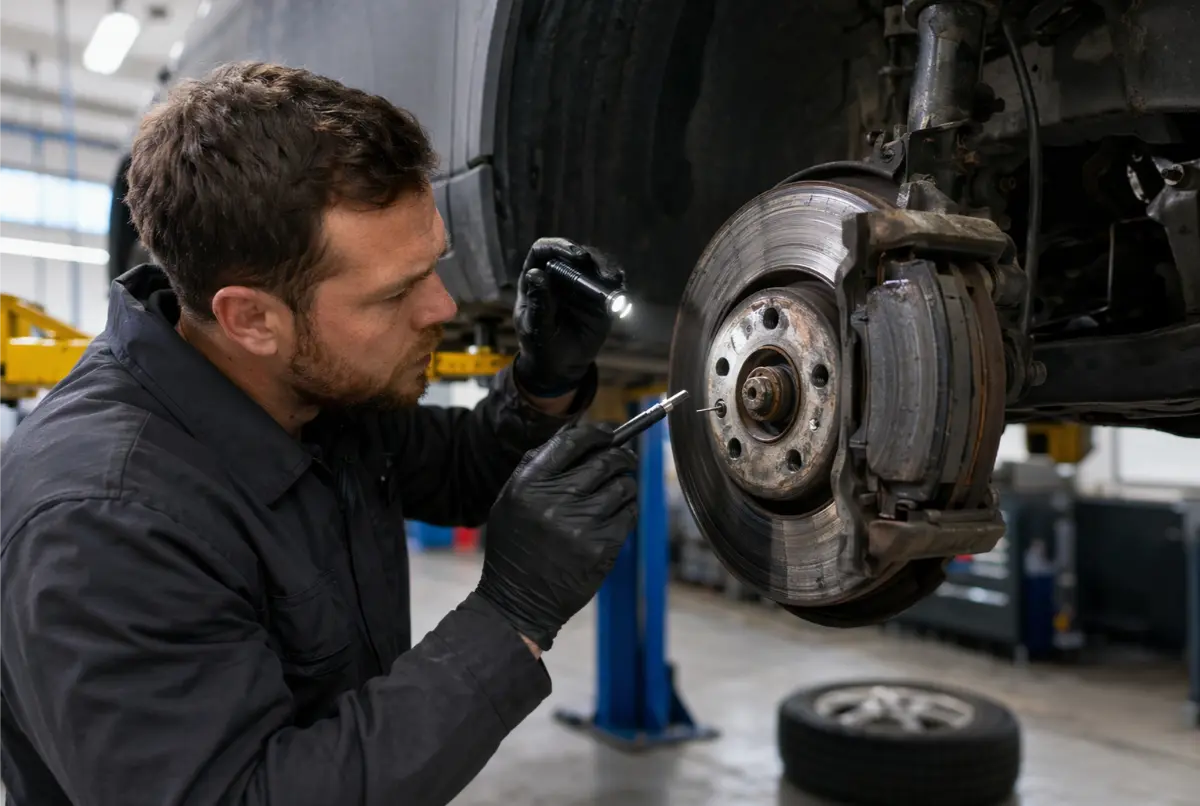
Brakes should feel firm, straight, and predictable. If the pedal feels spongy, the car pulls, or warning lights stay on, act fast. The Highway Code says not to ignore dangerous faults, and the MOT brake manual checks fluid, condition, and performance.
Highlights
- Test brake feel at low speed
- Watch for squealing, grinding, vibration, or warning lights
- Check for pulling to one side
- Include brake fluid in service checks
Specs
- Best for: Stopping power and fault detection
- How often to check: Every journey, plus service intervals
Pros
- Protects your key safety system
Cons
- Some faults need strip-down inspection
This ranks here because nothing affects safe stopping more directly.
4. Fluid levels
Small top-ups can prevent very expensive engine damage. Oil, coolant, brake fluid, and washer fluid all do different jobs, so low levels can mean overheating, weak braking, poor visibility, or fast wear. Check them weekly and before long trips, as the Highway Code says fluid levels should be checked at least weekly.
Highlights
- Check oil on level ground with the engine off, using the handbook and dipstick.
- Only inspect coolant when the engine is cold, as GOV.UK roadworthiness guidance advises.
- Watch brake fluid warnings and keep screenwash topped up year-round.
Specs
- Best for: Preventing overheating and wear
- How often to check: Weekly and before long trips
- Service focus: Oil, coolant, brake fluid, and screenwash
Pros
- Easy to monitor
- Helps spot leaks early
- Supports engine and brake reliability
Cons
- Some cars hide levels behind electronic systems
- Wrong fluid can cause problems
It ranks here because fluid checks often flag faults before a breakdown.
Honourable Mentions
- Wipers, washers, and screen wash – Clear vision is a safety system, not a convenience.
- Battery and charging system – A healthy electrical system keeps the car starting reliably.
- Suspension, steering, and underbody condition – Hidden checks that protect handling, tyre life, and ride quality.
How to choose the right car servicing routine
- Start with safety checks – tyres, lights, brakes, and fluids need regular attention, not just a look before MOT time.
- Follow your handbook – service intervals and fluid specs change by make, model, age, and mileage.
- Match checks to your driving – short trips and winter use mean more battery, screenwash, and tyre pressure checks.
- Run stricter routines for fleets and HGVs – build daily walkarounds and written inspection records into the job.
- Book a garage check fast if you spot pulling, bouncing, warning lights, odd noises, or fluid loss.
- Pair servicing with a pre-MOT check to cut surprise failures.
Frequently Asked Questions
Before every journey, UK drivers should check their tyres, lights, oil, coolant, brakes, mirrors, and wipers.
It is also important to make sure the number plates are clean and clearly visible, and that no dashboard warning lights are showing before setting off.
UK drivers should carry out quick vehicle checks weekly and before any long journey.
A full service should be booked in line with the manufacturer’s recommended service interval, or sooner if the vehicle is used heavily, covers high mileage, or is regularly driven in stop-start conditions.
A comprehensive car servicing checklist usually covers fluids, tyres, brakes, suspension, battery condition, lights, filters, belts, and diagnostic checks.
A.M. Engineering can carry out these checks as part of a professional car service, helping identify wear, faults, and maintenance issues before they become more serious.