A breakdown on a motorway is, without doubt, one of the most distressing things that can happen to an individual. With the speeds involved in motorway driving, with moving traffic at a constant pace, with few or no options to stop, the situation can rapidly turn into a potentially fatal one.
In the event of a mechanical failure or other problem occurring whilst driving, your sole concern should be to reach a relatively safe area and seek assistance.
The purpose of this article is to explain the events surrounding a breakdown on a motorway route within the United Kingdom. It will provide guidance as to what to do in the case of a smart motorway breakdown, guidance on maintaining your personal safety near the moving traffic and information as to when it is necessary to call upon a breakdown recovery service.
What Should You Do First If Your Car Breaks Down on a Motorway?
The first thing you need to do when your vehicle has a problem is be aware of what’s happening, stay calm, and take action fast.
When you develop a problem with your vehicle, the first thing you want to do is get out of the way of all traffic and get as far to the left as possible. If you can, drive onto the hard shoulder and stop. If you are in one of these smart motorways, then try to find an “Emergency Area” or an “Emergency Refuge Area”, which will have orange SOS signs.
When you can’t get off the motorway right now, then pull over to the hard shoulder and stop as close to the centre line as possible.
If you break down on a motorway, the priority is your safety. To do that, move to the left of the road and prepare to exit your vehicle on the passenger side if it is safe.
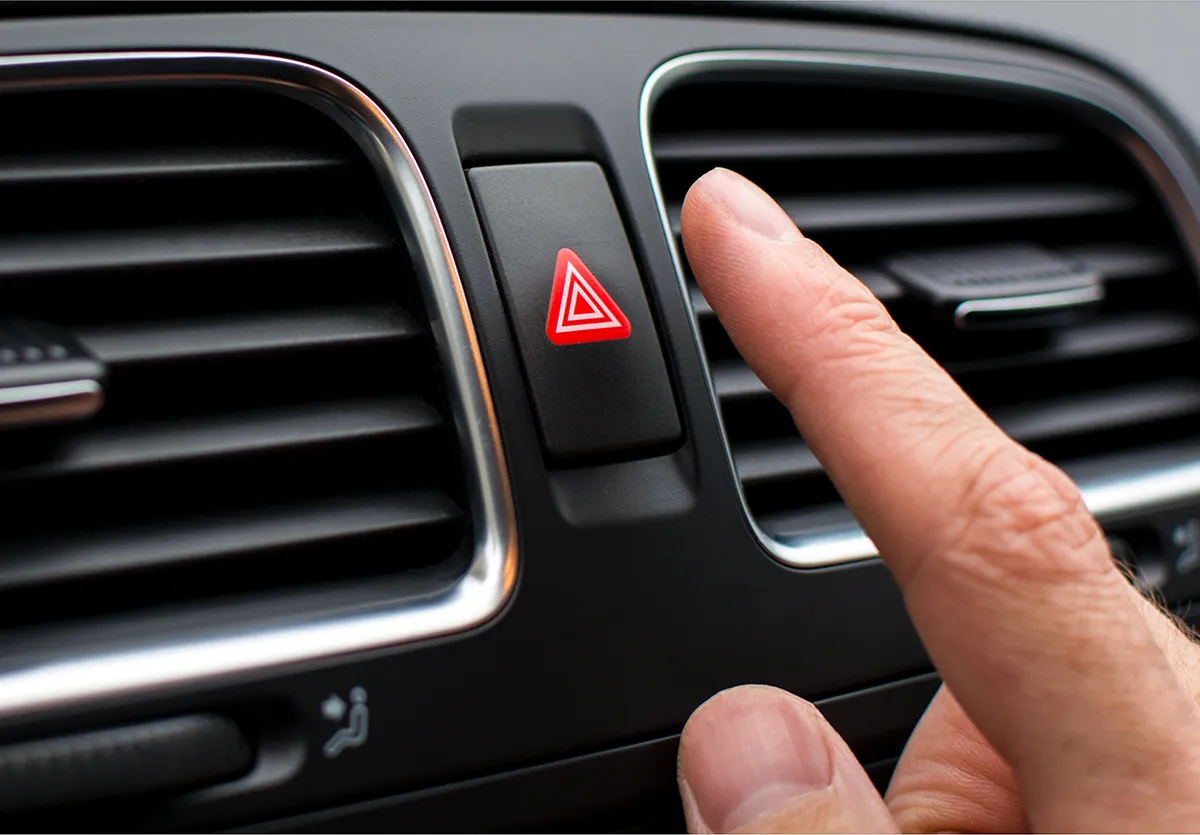
- Turn on your hazard lights immediately
- Move into the left hand lane and start to do a slow and controlled left lane pull
- Gradually reduce your speed. Don’t brake suddenly.
- Steer safely onto the hard shoulder and stop.
Once safely parked, follow these steps:
- Turn your wheels to the left so that you do not roll back into traffic
- Apply the hand brake
- Turn on your hazard warning lights and ensure they remain on
At this stage, your focus is on making yourself more visible to other road users and getting as close to relative safety as possible.
Once Stopped - How to Exit Your Vehicle Safely
When it’s safe for you to leave your vehicle and you’re on the hard shoulder or in an emergency area, you’ll need to leave the vehicle and move away from traffic.
- Always remember to leave the vehicle using the passenger side of the vehicle (the left side), as this is generally farthest from traffic that may be travelling at high speeds.
- Ensure all people are exiting the vehicle on the same side.
- Keep all pets locked in the vehicle to prevent them from escaping and possibly being injured by traffic.
After exiting:
- Move directly behind the barrier for safety
- After you have exited the vehicle, stay behind the safety barrier to prevent injury from the highway traffic
- Step back as far as possible from the roadway and any passing vehicles
- Do not get out of your vehicle or stand near the vehicle where you broke down
Do not go back to your vehicle if you are already on the hard shoulder (the emergency lane), regardless of the weather.
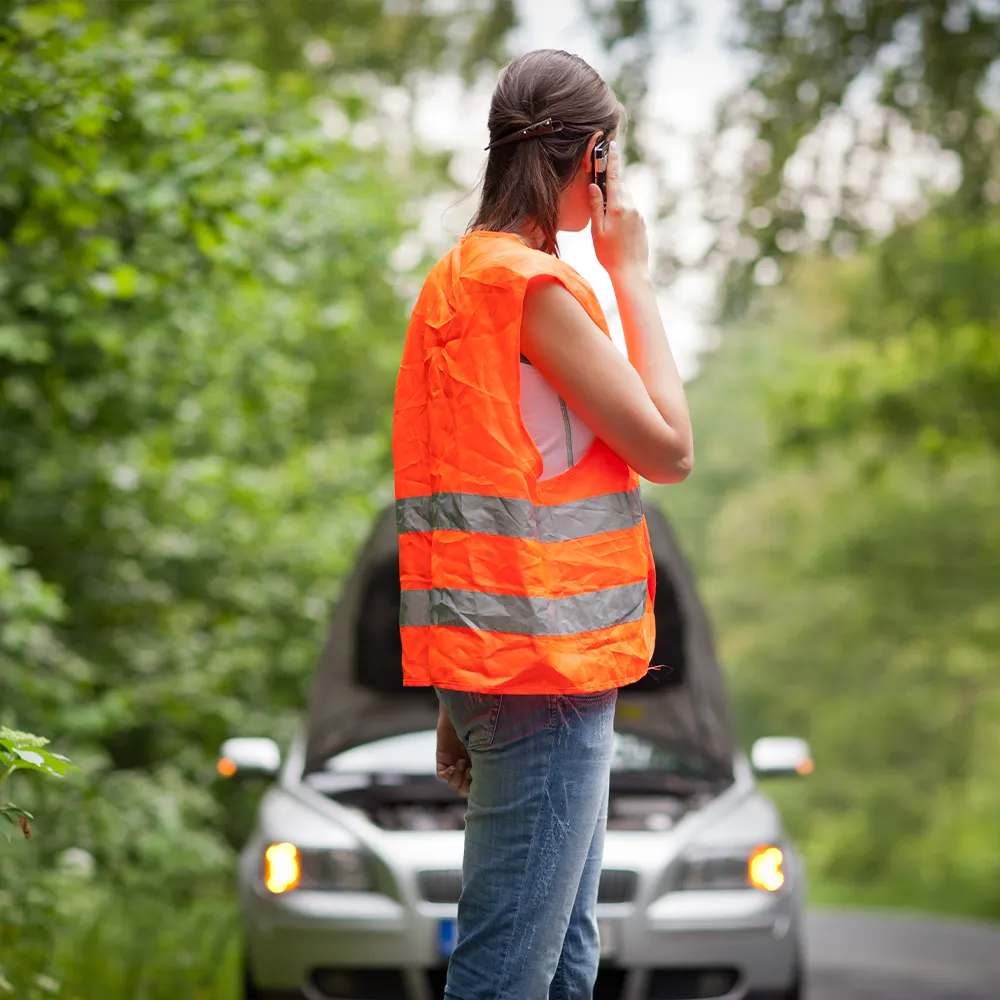
Wear bright clothing, such as high-visibility clothing, if you can easily reach it when exiting the vehicle.
Standing near a live motorway lane is extremely hazardous and very dangerous, with all moving traffic travelling at the faster, legal motorway speeds.
If there is no barrier, then try to place yourself as far away from the road as possible to provide some level of relative safety.
How to Call for Help on a Motorway
Once you are in a safe position behind the barrier, you should call for assistance.
You have several options:
Using an Emergency Telephone
Motorways are equipped with a free emergency telephone at regular intervals.
- Walk to the nearest emergency phone
- Follow the arrow on the marker posts to locate the nearest telephone
- The emergency telephone switch connects you directly to National Highways
You should use the nearest emergency phone to call for help. You can use telephones located along the motorway to contact roadside assistance.
Using an emergency telephone is often more accurate than using a mobile phone, as your location is automatically identified.
Using a Mobile Phone
If using a mobile:
- Call your breakdown assistance provider or roadside assistance provider
- Alternatively, use a mobile to call National Highways at 0300 123 5000
- Use a mobile telephone mapping application to confirm your location
Look for the nearest white marker posts or driver location signs to identify your location when calling for help.
If you are a vulnerable motorist or have passengers with additional needs, you should inform the operator when you call for roadside assistance.
When Should You Call 999?
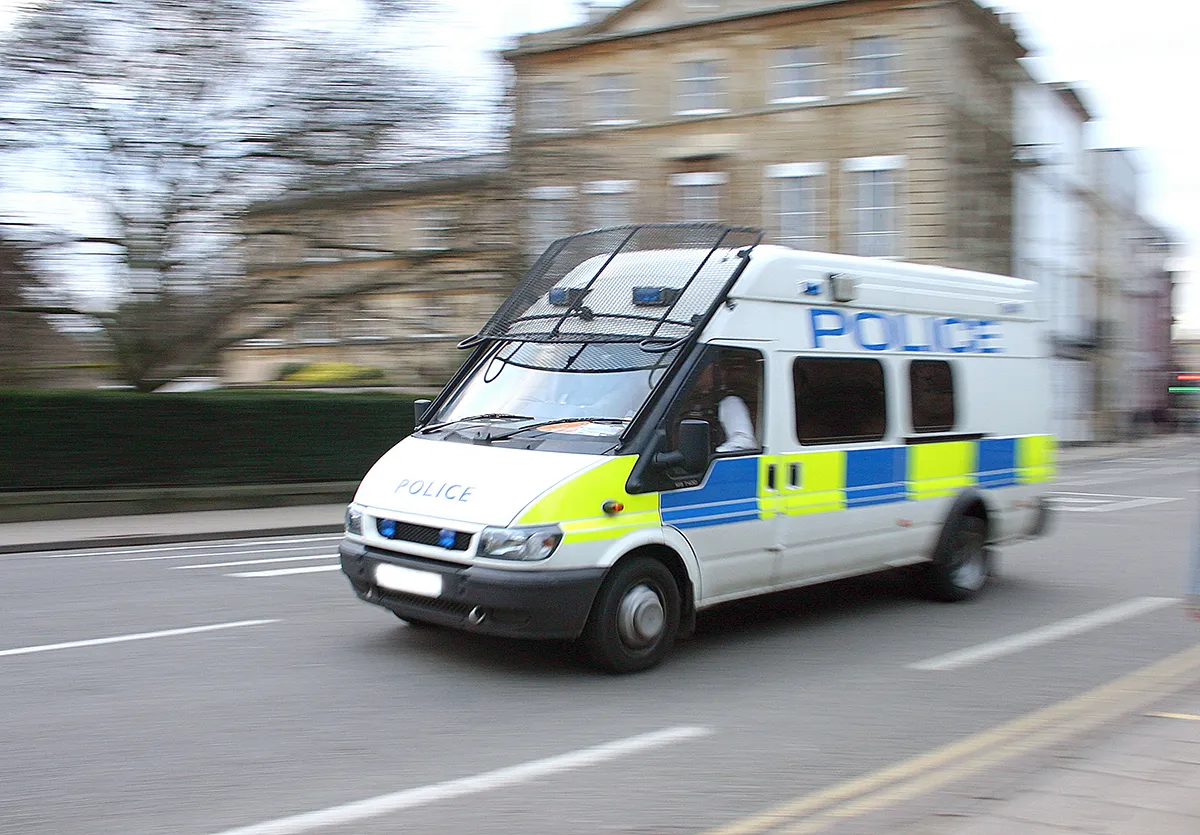
If you are in immediate danger from a broken-down vehicle, you must call 999 immediately.
Examples of when you may be at risk include:
- If your vehicle breaks down in a live lane
- You can’t access the hard shoulder or emergency area
- Other vehicles on the road can not safely pass your vehicle
- Traffic travelling along the motorway has a high chance of colliding with your vehicle.
In each of these cases:
- Remain in your vehicle
- Wear your seatbelt
- Switch your hazard lights on
- Ring 999
Please dial 999 if you feel you are in immediate danger as a result of a breakdown on a motorway.
The Police, Fire Service and Traffic Officers will attend and deal with the incident and provide safety measures to prevent harm to others using the motorway.
Please remain in your vehicle wearing your seatbelt if it is unsafe to leave your vehicle.
Do not attempt to exit your vehicle if you are in a live lane unless instructed – this is very dangerous.
What To Do on a Smart Motorway? Find an Emergency Refuge Area
A smart motorway does not always have a permanent hard shoulder, which increases risk if a vehicle develops a problem.
If possible:
- Move to the nearest emergency refuge area
- Follow signs for the next exit or pull into a service area
The SOS sign (in orange) is used to mark the emergency areas along Smart Motorways so that drivers can identify these locations in case of a car breakdown.
If you experience a breakdown, you should attempt to pull over at the next available emergency area or leave the motorway altogether.
Emergency Areas are designated with blue signs and orange SOS symbols; they offer relatively safe conditions for vehicles that have experienced mechanical failure.
In the event you cannot access an Emergency area:
- Remain in your vehicle
- Wear your seatbelt
- Engage Hazard Warning Lights
- Call 999 immediately
Smart motorways are continuously monitored using cameras and traffic monitoring systems, as well as by means of variable speed limits to control traffic flow. In spite of this technology, a stationary vehicle may create unseen hazards to other drivers in passing traffic.
What NOT To Do During a Motorway Breakdown
Many motorway accidents become extremely dangerous due to bad choices.
You should avoid:
- Do not attempt repairs on the motorway
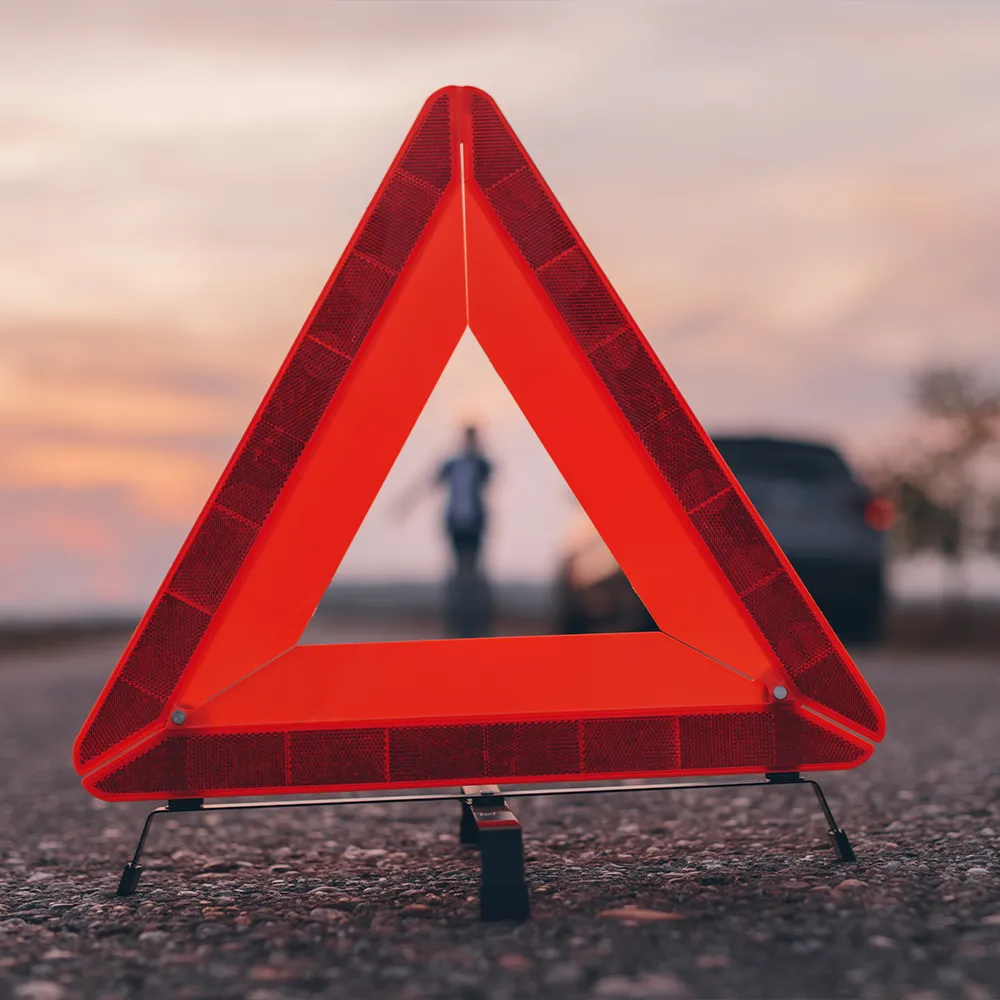
- Don’t put a warning triangle on the motorway as it’s dangerous with cars speeding by
- Do not get back into your car after moving behind the barrier
- Do not cross live traffic lanes onto oncoming traffic
- Do not stop to help another stranded vehicle
Even simple actions can put you at risk when other vehicles are travelling at speed.
Legal Rules Around Motorway Breakdowns
Under the Highway Code, stopping on a motorway is only permitted in specific circumstances.
Stopping on the motorway for any reason other than a few specific circumstances is likely to be considered illegal.
Key points:
- It is illegal to stop on the hard shoulder of a motorway unless in an emergency or directed by police or National Highways staff.
- You may be directed to stop by a police officer, a traffic officer, or a National Highways officer.
- If you stop on the hard shoulder without being directed to do so, you could be fined and receive penalty points on your licence.
Motorways are designed for continuous flow. Any stationary vehicle creates a hazard for other traffic and other road users.
Common Causes of Motorway Breakdowns
Many breakdowns occur suddenly; some may be due to avoidable problems. Common causes for breakdowns consist of:
- flat batteries / electrical faults
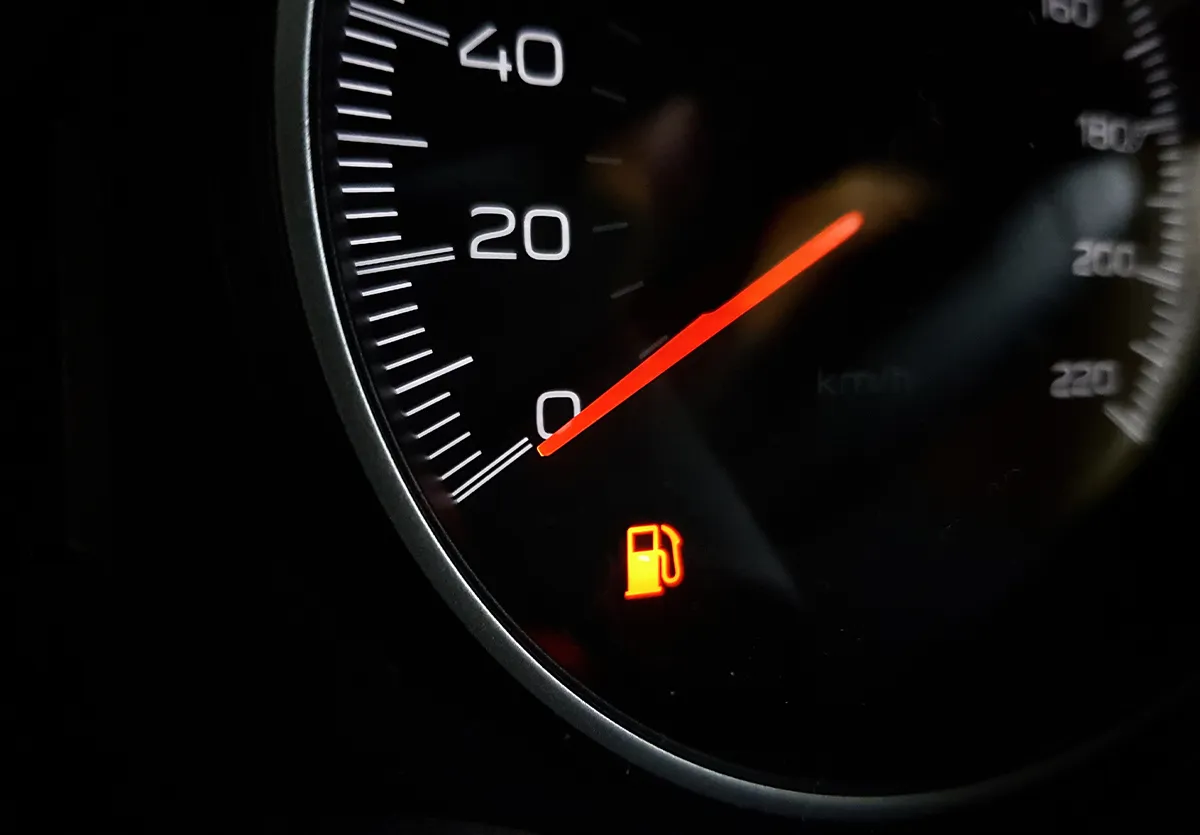
- lack of fuel (still the most common reason)
- tyres blowing or puncturing
- overheated engines
- ignoring warning lights
- low fluid levels
Flat batteries are one of the main reasons for breakdowns, along with tyre issues such as a blowout or a puncture.
Electrical failure can result in breakdowns.
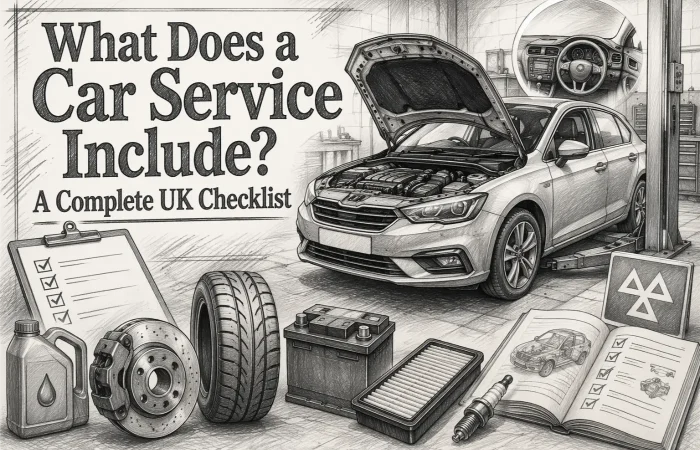
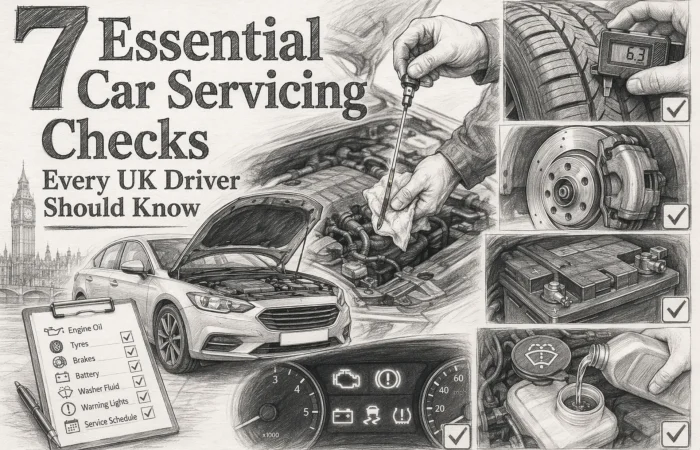
By carrying out regular checks of your vehicle’s fluids, you could greatly decrease your chances of having a breakdown. Also, carrying out regular maintenance, checking fluid levels & early action when seeing dashboard warnings will significantly reduce the likelihood of a breakdown.
Additional Safety Tips to Reduce Risk
To ensure safety when breaking down on the motorway:
- Wear reflective gear (if available)
- Keep your hazard warning lights illuminated for other drivers. Hazard warning lights stay on at all times.
- Remain conscious of the flow of vehicular traffic & traffic that may be passing you
- Never stand between your vehicle & the carriageway
- Utilise the marker posts & driver location signs to inform others of your location
You should always inspect your vehicle for damage before commencing travel to minimise the chance of a breakdown.
Even after establishing some sense of security from potential harm, remain vigilant to possible hidden hazards, such as steep declines in road elevation or unstable terrain in proximity to an embankment.
When to Use a Breakdown Recovery Service
A professional breakdown recovery service will be required for your vehicle to be safely removed from the road if it can no longer be safely operated.
We would recommend contacting our roadside assistance service if:
- Your vehicle fails to start again.
- The cause of the problem is unknown.
- The location poses a significant risk to your safety.
- A new fault occurs with the potential to increase in severity.
Our roadside assistance services are available 24/7, and we have the ability to recover cars, vans and light commercial vehicles safely.
In the majority of motorway situations, it is neither safe nor practical to attempt to repair the fault yourself.
How Recovery Works After a Breakdown on a Motorway
Once you contact us for help, our recovery process will get started right away.
Normally, we do this by:
- Locating where you are with marker posts or data from an emergency phone
- Dispatching a suitable recovery truck
- Securing your disabled vehicle and transporting it.
Flat-bed recovery is very common because it leaves all of the wheels off the ground and helps prevent additional damage to your vehicle.
Depending upon your circumstances, we can transport your vehicle to a garage, service area or your home.
Preventing Future Breakdowns
While some breakdowns cannot be prevented, there are ways in which you can lower the risk of one occurring:
- Always check the level of your fuel before making long trips.
- Always look for warning lights on your dashboard, and address them quickly.
- Always check the condition of your tyres and replace them when necessary.
- Always ensure that all fluid levels are at the appropriate levels.
- Always service your vehicle as often as suggested by the manufacturer.
A well maintained vehicle is much less likely to break down and leave you stranded on a motorway.
Motorway Recovery in the Midlands, Bromsgrove and Worcestershire
If you have a breakdown, it is very important that there is an immediate response.
A.M. Engineering provides Vehicle Recovery & Roadside Assistance in Worcestershire and all surrounding areas and mainland Great Britain.
Our priority is:
- Minimising the time to respond to allow the least amount of danger.
- To safely recover and transport your vehicle.
- To assist with private, business, and commercial vehicles.
- For clear and continuous communication.
If your car has broken down on a motorway, or if you require immediate roadside assistance, then our team are here to support you in getting back on the road as quickly and safely as possible.
Frequently Asked Questions
If your car has broken down on a motorway, try to get it to the side of the road (hard shoulder) or an emergency area (if available). Switch on your hazard warning lights and stop your vehicle safely. Ensure wheels turned in.
Once stopped, open the left-hand door of your vehicle and move to a safe position behind the barrier. If you cannot reach a safe position, remain in your vehicle with your seat belt on and ring 999 immediately.
If you are on the hard shoulder, you should exit your vehicle and move away from the carriageway behind the barrier.
If you are in a live lane on a smart motorway and cannot reach an emergency refuge area, you should stay inside your vehicle, keep your seat belt fastened, and call 999.
Your primary concern should be reaching a relatively safe location. Move into the hard shoulder (or to an emergency area), turn on your hazard lights, pull over and stop safely and get out of the vehicle if it is safe to do so.
Once you are away from your vehicle, stand behind the safety barrier. Then call for assistance.
You can contact:
- If you have a roadside assistance provider, please get in touch with them for help. If you have no breakdown service, then contact AM Engineering at: 01527 833748
- Contact National Highways (you can use the nearest emergency telephone)
- Call Emergency Services immediately if you are in immediate danger
Motorway locations can be identified with:
- Driver location signs
- Marker posts located on the hard shoulder
- Details obtained from a roadside emergency call box
Providing this information to recovery services, emergency services, and other responders will enable them to respond as quickly and effectively as possible.
Yes, you can use a mobile once you have moved into a safe area, ideally behind the safety barrier.
Depending upon what has happened, you should try to contact either your breakdown service, National Highways, or emergency services. A mobile telephone mapping app can also be used to confirm where you are located.
Yes, it is illegal to stop on the hard shoulder unless it is an emergency or you are instructed to do so by a police officer, traffic officers, or National Highways.
Unnecessary stopping can result in fines and penalty points.
No. You should not place a warning triangle on a motorway due to the risk from high speed moving traffic.
It is unsafe to walk back along the carriageway to position one.
Running out of fuel is considered a preventable breakdown.
You should follow standard breakdown procedures, but you may be responsible for recovery costs. Always aim to reach a service area or the next exit before your fuel runs low.
A motorway breakdown can feel overwhelming, but the key is to stay calm, prioritise safety, and follow the correct steps.
Get to a safe place, move away from the vehicle, and call for help as quickly as possible.
By following the above advice, you reduce risk, protect yourself and other road users, and ensure the situation is handled safely and professionally.