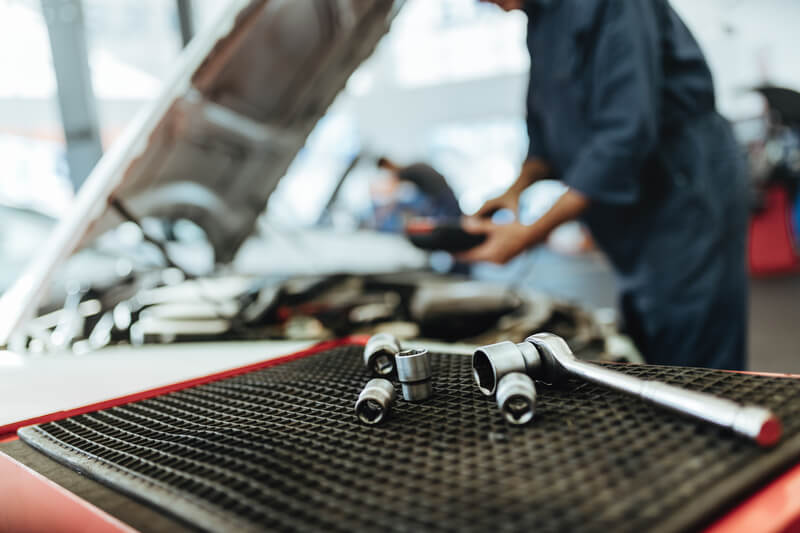
Planned maintenance allows important fluids, filters and mechanical components to be assessed before wear develops into a more disruptive problem.
Depending on the package selected, the appointment may cover the engine oil, filters, suspension, braking system, lights, switches and seatbelts.
This can help identify concerns such as:
- Deteriorating oil or filters
- Worn braking components
- Tyre damage or uneven wear
- Suspension movement
- Visible leaks
- Exhaust deterioration
- Dashboard warning lights
Regular attention does not guarantee that a car will never break down. It does, however, provide an opportunity to identify visible or detectable concerns before they become more serious.
The correct service interval is always based on the manufacturer’s handbook or digital schedule, which considers engine type, usage, and manufacturer guidelines to ensure optimal vehicle health.
As general guidance, many motorists follow these intervals:
- An interim car service at around 6 months or 6,000 miles
- A full car service at around 12 months or 12,000 miles
- More extensive maintenance at approximately 24 months or 24,000 miles
These figures are general benchmarks rather than fixed rules. Some manufacturers specify longer or shorter intervals, while modern cars may calculate the next appointment according to mileage, journey type and engine use.
The RAC advises drivers to follow the manufacturer schedule, with 12 months or 12,000 miles commonly used as a guide for annual maintenance.
Cars may require earlier attention when they:
- Cover high annual mileage
- Complete frequent short journeys
- Spend considerable time in stop-start traffic
- Carry heavy loads
- Tow regularly
- Are used commercially
When the previous date is unknown, check the service book, digital history and old invoices. Where no reliable record exists, tell the workshop when booking.
These terms describe different levels of scheduled maintenance. The exact checklist can vary, so motorists should confirm what is included before approving the work.
Interim
This is commonly used between annual appointments by high-mileage drivers. It generally focuses on oil, filters, fluid levels and essential safety checks.
It does not normally replace the more comprehensive work required annually or at the manufacturer’s specified interval.
Full
This is the usual annual option for many motorists. It typically covers more components and serviceable items than the six-month package.
The exact contents depend on the car, engine, age and maintenance schedule.
Major
This is a more extensive appointment carried out at longer intervals. Depending on the model, it may include additional items such as spark plugs, brake fluid, cabin filters or other scheduled replacements.
Some manufacturers also specify separate replacement intervals for components such as timing belts. These should be checked against the requirements for the specific engine rather than estimated from mileage alone.